Martial Arts are extensive systems of codified practices and traditions of combat, practiced for a variety of reasons, including self-defense, competition, physical health and fitness, as well as mental and spiritual development.
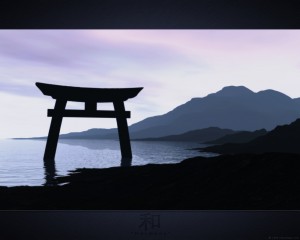
Balance & Harmony. Yin and Yang.
The term Martial Arts today has become heavily associated with the fighting arts of eastern Asia, but was originally used in regard to the combat systems of Europe as early as the 1550s and an English fencing manual of 1639 used it in reference specifically to the “Science and Art” of swordplay. The term is ultimately derived from Latin, martial arts being the “Arts of Mars,” the Roman god of war.
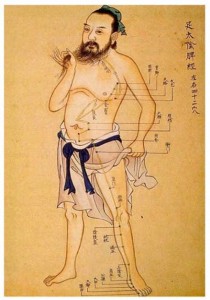
Acupuncture Meridian Man
Some Martial Arts are considered “traditional” and tied to an ethnic, cultural or religious background, while others are modern systems developed either by a founder, or by an association.
Many martial arts, especially those from Asia, also teach side disciplines which pertain to medicinal practices. This is particularly prevalent in traditional Chinese martial arts which may teach bone-setting, quigong, acupuncture, acupressure and other aspects of traditional Chinese medicine.
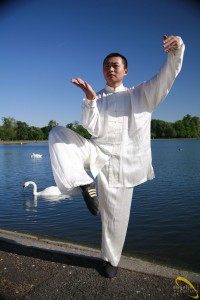
The beautiful Meditation in Motion through Kung Fu and Tai Ch
By focusing on breath and relaxation, Martial Arts induces self-conscience and calmness, which benefits the daily life of the practitioner as these concepts are incorporated. Martial Arts helps to improve the physiological systems and to benefit the human being in different levels: the physical, the psychological and the spiritual.
“There are no superior Martial Arts, there are Superior Martial Artists. This applies to a variety of areas and disciplines. Use these systems as a framework as all systems are artificial; limited creations of man that intend to teach followers the best way.”
(Zenhaling is highly influenced by overall Principles taught in Jeet Kuen Do)
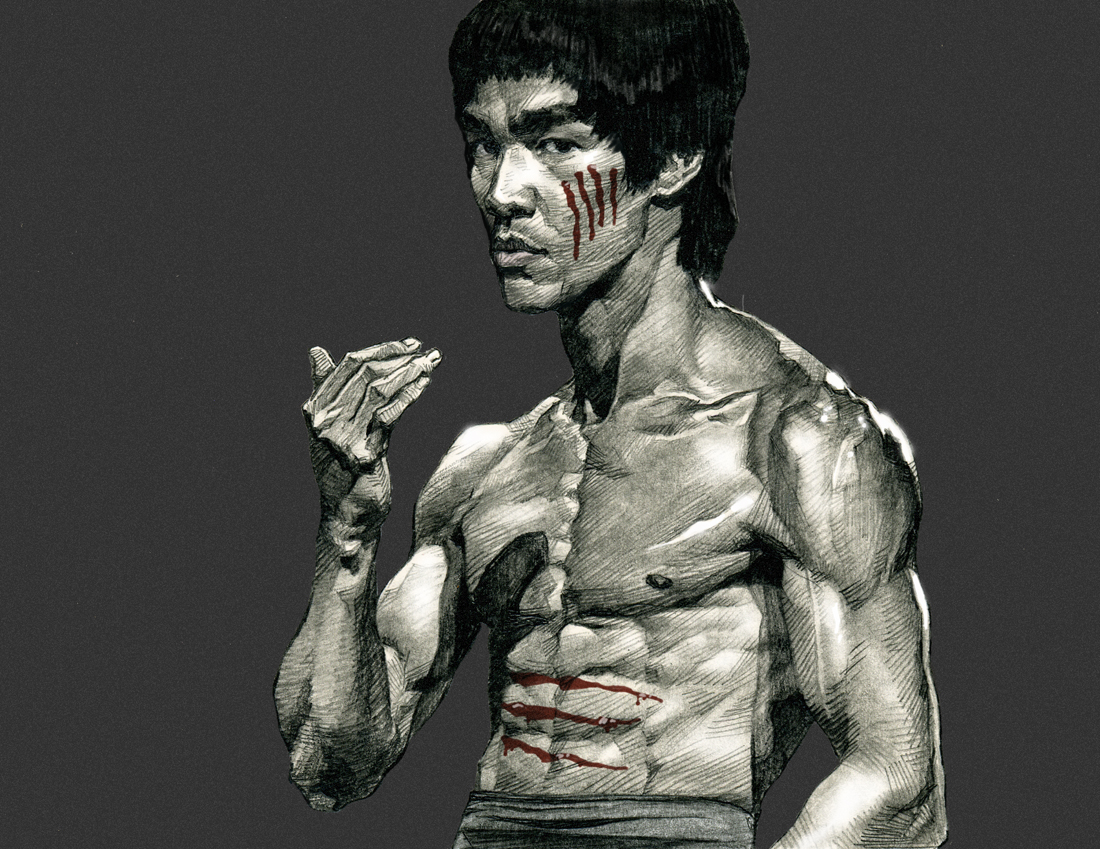 Jeet Kune Do (截拳道; also “Jeet Kun Do”, “JKD,” or “Jeet Kuen Do”) is a hybrid martial arts system and life philosophy founded by martial artist Bruce Lee with direct, non classical and straightforward movements. Due to the way his style works they believe in minimal movement with maximum effect and extreme speed. The system works on the use of different ‘tools’ for different situations. These situations are broken down into ranges (Kicking, Punching, Trapping and Grappling), with techniques flowing smoothly between them. It is referred to as a “style without style”. Unlike more traditional martial arts, Jeet Kune Do is not fixed or patterned, and is a philosophy with guiding thoughts. It was named for the concept of interception, or attacking your opponent while he is about to attack. However, the name Jeet Kune Do was often said by Bruce Lee to be just a name. He himself often referred to it as “The art of expressing the human body” in his writings and in interviews. Through his studies Bruce came to believe that styles had become too rigid, and unrealistic. He called martial art competitions of the day “Dry land swimming”. He believed that combat was spontaneous, and that a martial artist cannot predict it, only react to it, and that a good martial artist should “Be like water” and move fluidly without hesitation.
This is a Funny Clip that proves that Martial Arts is for Anyone and Everyone!
Tony Ja in Action.
http://youtu.be/wSMjAZvUGFM