
ANCESTORS OF THE Z-STICK
The earliest form of the bo, a staff, has been used throughout Asia since the beginning of recorded history. The first bo were called ishibo, and were made of stone. These were hard to make and were often unreliable. These were also extremely heavy. The konsaibo was a very distant variant of the kanabo. They were made from wood studded with iron. These were still too cumbersome for actual combat, so they were later replaced by unmodified hardwood staffs.
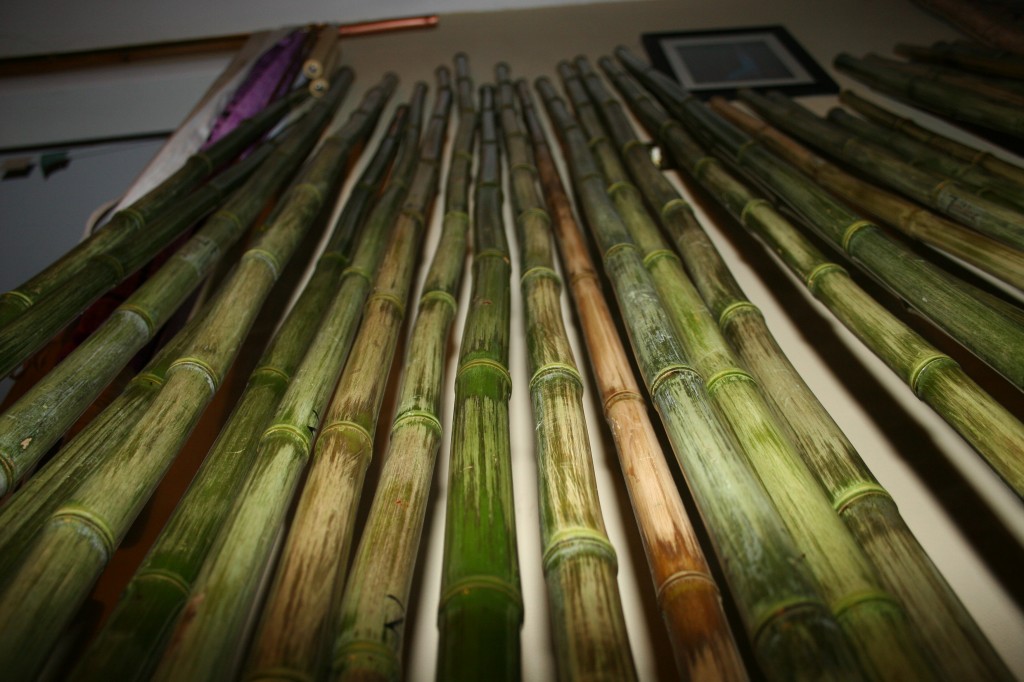
Z-Sticks chillin’ after a good day of Training!
BAMBOO IS AMAZING!
http://youtu.be/FfDOMwFX5Hg
The bo used for self defense by monks or commoners, the staff was an integral part of the Tenshin Shoden Katori Shinto Ryu, one of the martial arts’ oldest surviving styles. The staff evolved into the bo with the foundation of kobudo, a martial art using weapons, which emerged in Okinawa in the early 17th century.
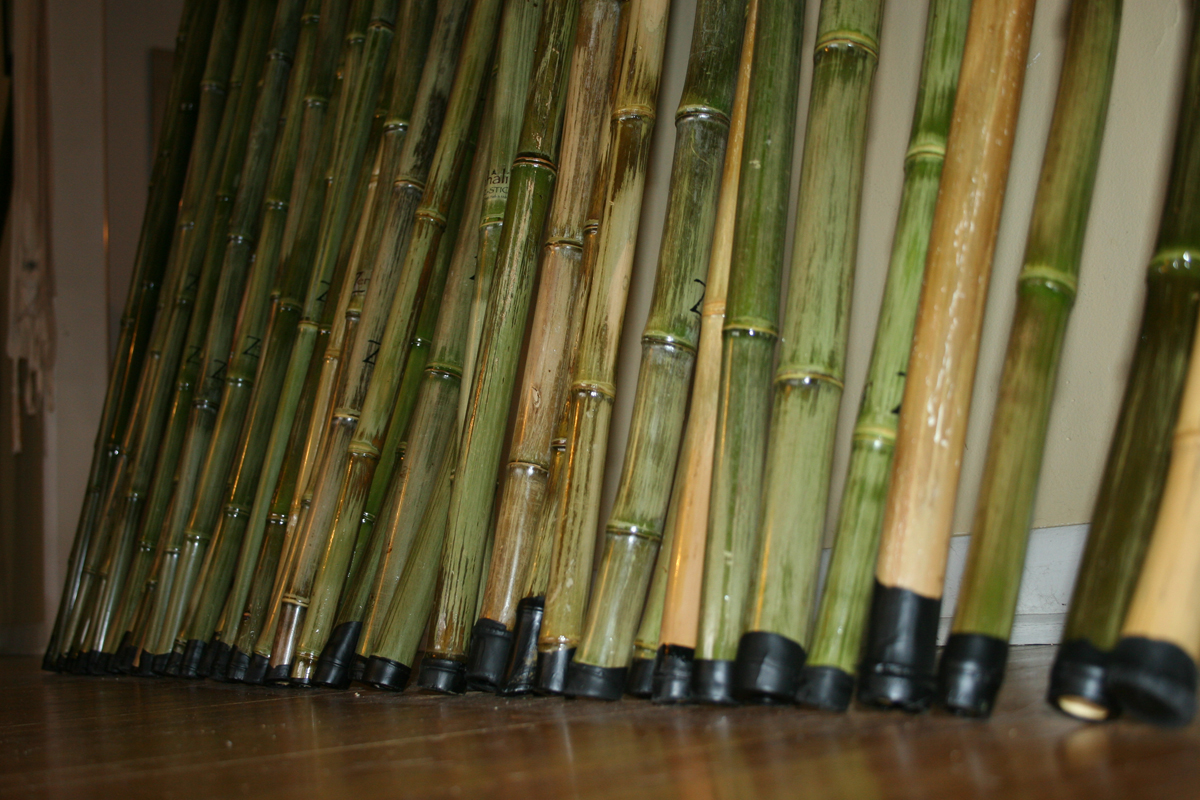
The end of the Z-Stick is hand dipped to add traction, reduce noise and soften the edges. Get a Z-Stick only from Zenhaling!
After much political turmoil, Okinawa was united under the Sho Dynasty in 1429. In 1477, Emperor Sho Shin of the second Sho dynasty came into power. Determined to enforce his philosophical and ethical ideas, while banning feudalism, the emperor instituted a ban on weapons. It became a crime to carry or own weapons such as swords, in an attempt to prevent further turmoil and prevent uprising. In an attempt to protect themselves , the people of Okinawa looked to simple farming implements, which the samurai would not be able to confiscate, as new methods of defense.
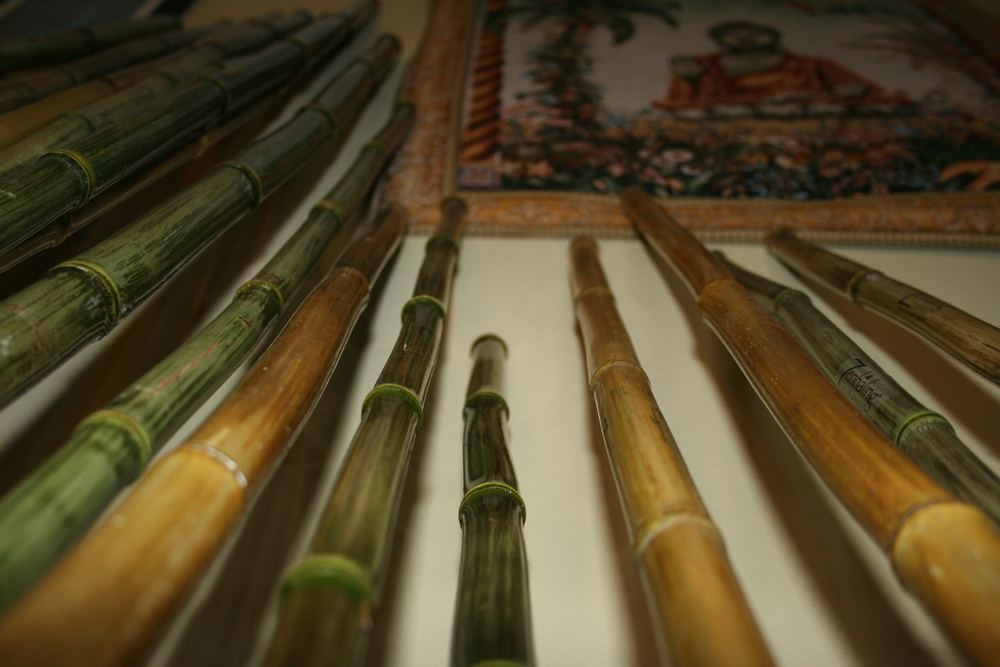
Z-Sticks are Strong Yet Flexible and Made of 100% locally harvested Bamboo!
This use of weapons developed into kobudo, or “ancient martial art,” as we know it today. Although the bo is now used as a weapon, its use is believed by some to have evolved from the long stick tenbin which was used to balance buckets or baskets. Typically, one would carry baskets of harvested crops or buckets of water or milk or fish etc., one at each end of the tenbin, that is balanced across the middle of the back at the shoulder blades. In poorer agrarian economies, the tenbin remains a traditional farm work implement.
There are stick fighting techniques native to just about every country on every continent.
http://youtu.be/QtWqGe_rcZQ
The Secret of Bamboo